
Home » Areas We Cover » Roof Cleaning Sturminster Newton
Vale farmhouses, stone cottages and village bungalows stripped of moss, cleaned with gentle steam and treated with a biodegradable biocide, all from access equipment rather than your tiles.
Give us a few details and we’ll phone back with a date.
Long experience with roofs old and new across the county.
A firm No Foot on Tile rule, whatever the roof.
An outside tap and clear access is all we need.
Checkatrade-approved, with 900+ five-star reviews.
Sturminster Newton sits in the heart of the Blackmore Vale, a broad lowland of heavy clay soils, small fields and thick hedgerows. Rain does not drain away quickly here. The ground stays wet through winter, the River Stour loops slowly past the town and its old mill, and the meadows either side often flood. With so much standing water, the air in the vale feels damp for months at a time.
Roofs reflect that farming heritage: stone and brick farmhouses, cottages in the older lanes and village centres, and later bungalows built as the villages grew. Many sit close to mature oaks and ash in the hedgerows, which throw shade across the tiles and keep north slopes from drying, ideal conditions for moss.
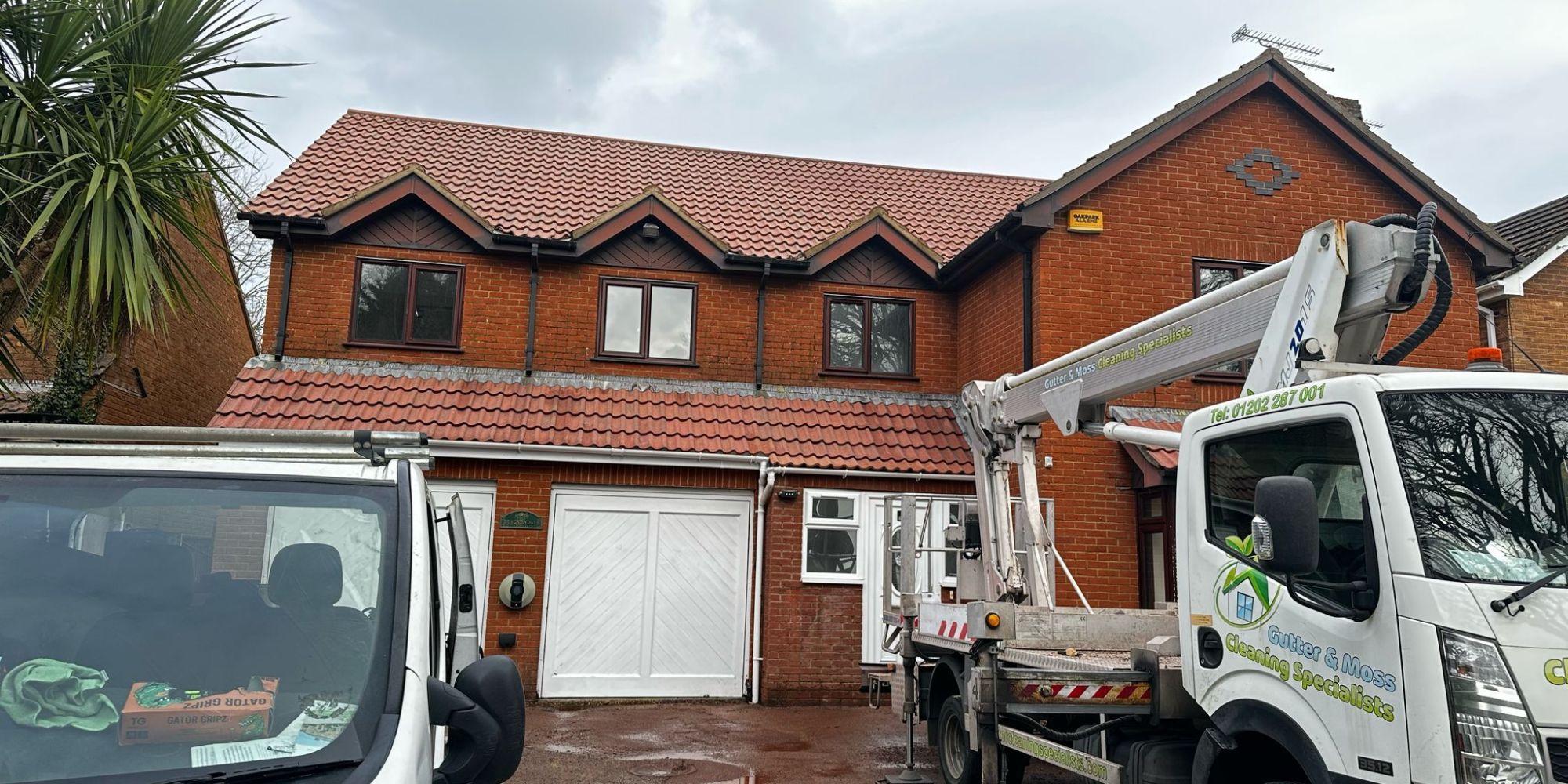
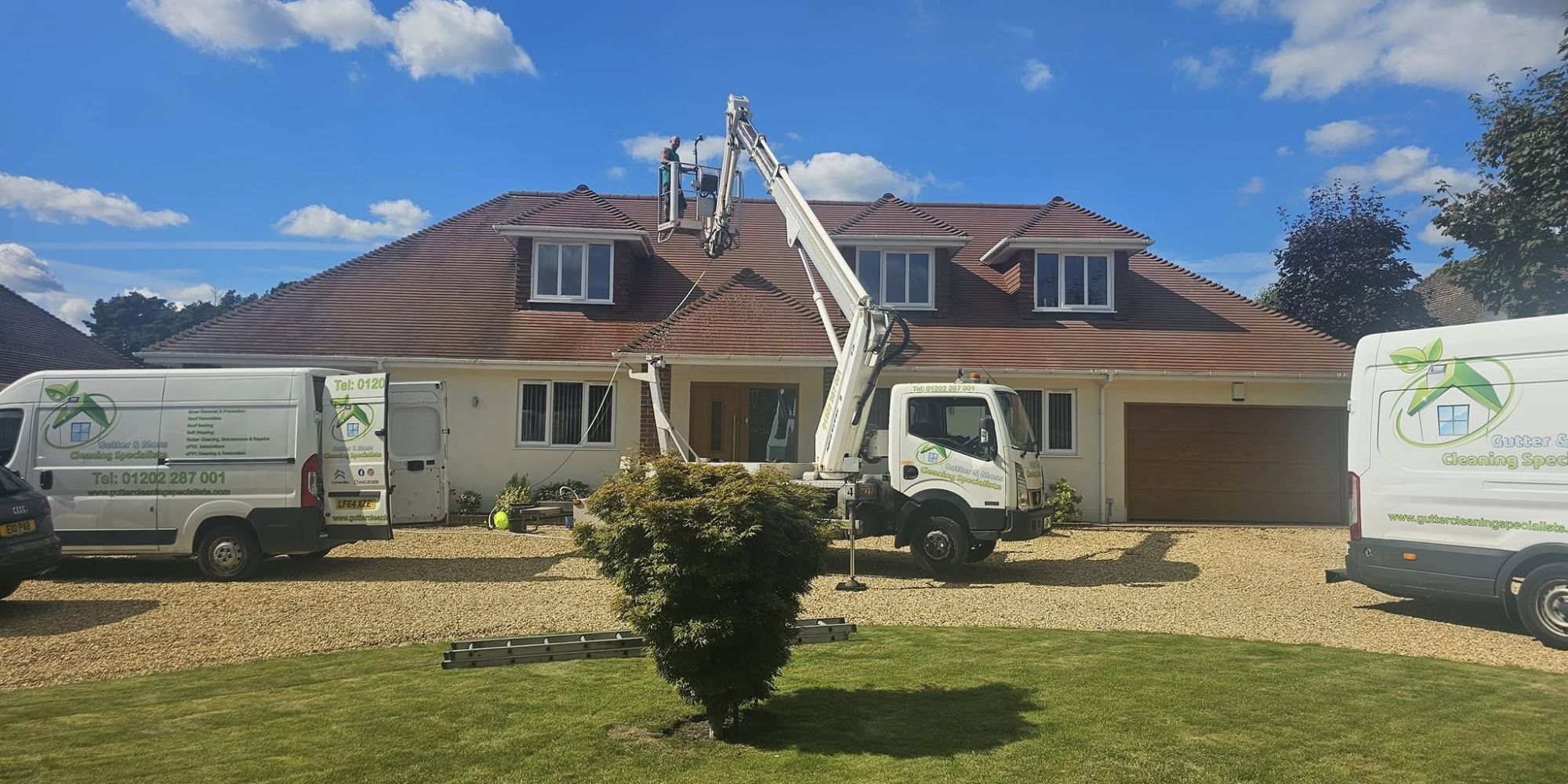
Moss in a valley this wet rarely gets a chance to dry out, and that’s the problem. A sodden mat of it can push a roof’s load up by as much as 20% in winter, and on a farmhouse with a big span of old rafters, that is a lot of extra weight. Water held in the moss also works into tile joints, and when frost settles in the low-lying vale it freezes, expands and gradually breaks the tile edges apart.
On long farmhouse roofs a great deal of debris eventually rolls into just a few gutter runs. Once those fill, the overflow pours onto stone walls and plinths, where damp can linger for weeks and creep into the rooms behind.
Big farmhouse roofs, low cottage eaves and tidy modern bungalows are all handled with the same sequence of three stages. The equipment and pace change with the building; the principle doesn’t. All the work happens from a cherry picker or tower, and at the free survey we’ll explain what we found and what to expect.
We begin with the deep, spongy growth that holds the most water. Reaching in from the side of the roof, the team works with telescopic scrapers and purpose-made hand tools to clear tile courses, ridge lines and the corners around chimneys and dormers. On rambling rural roofs that can mean a lot of moss, so it is bagged as we work and removed for responsible disposal.
Underneath the moss there’s usually a stubborn skin of green algae and lichen. We loosen that with gentle, low-pressure steam, letting heat rather than force do the work and leaves the tile surface unscathed. It handles weathered clay, natural slate and concrete equally well, so even the oldest cottage roof can be cleaned back without risking the material that keeps it watertight.
In a vale as damp as this one, spores settle constantly, so protection is essential. Our finishing spray is a biodegradable biocide of professional grade, approved for industry use, and it kills growth at the root. Skip it and moss can reappear in six to twelve months; apply it and the roof should stay clear for two to three years or more, with a refresh every two years recommended. On roofs ringed by hedgerow trees, that top-up is well worth keeping to.


 Trustindex verifies that the original source of the review is Google.
 Trustindex verifies that the original source of the review is Google.
 Trustindex verifies that the original source of the review is Google.
 Trustindex verifies that the original source of the review is Google.
 Trustindex verifies that the original source of the review is Google.
 Trustindex verifies that the original source of the review is Google.
 Trustindex verifies that the original source of the review is Google.
 Trustindex verifies that the original source of the review is Google.
 Trustindex verifies that the original source of the review is Google.
On a cottage roof that has stood for a century or more, a high-pressure jet can do more harm in an afternoon than the weather does in years. Our low-pressure steam and soft wash clean thoroughly without that risk to the roof.
Clearing a roof inevitably fills the gutters, so flushing them is simply part of the job and never an add-on. On farmhouses with several gutter runs, that adds up to a real saving.
After the final stage we wash out every gutter run, test that the downpipes are draining freely and bag up the residue for responsible disposal. With hedgerow oaks and ash shedding leaves over so many vale properties each autumn, it leaves your drainage clear for the wettest part of the year.
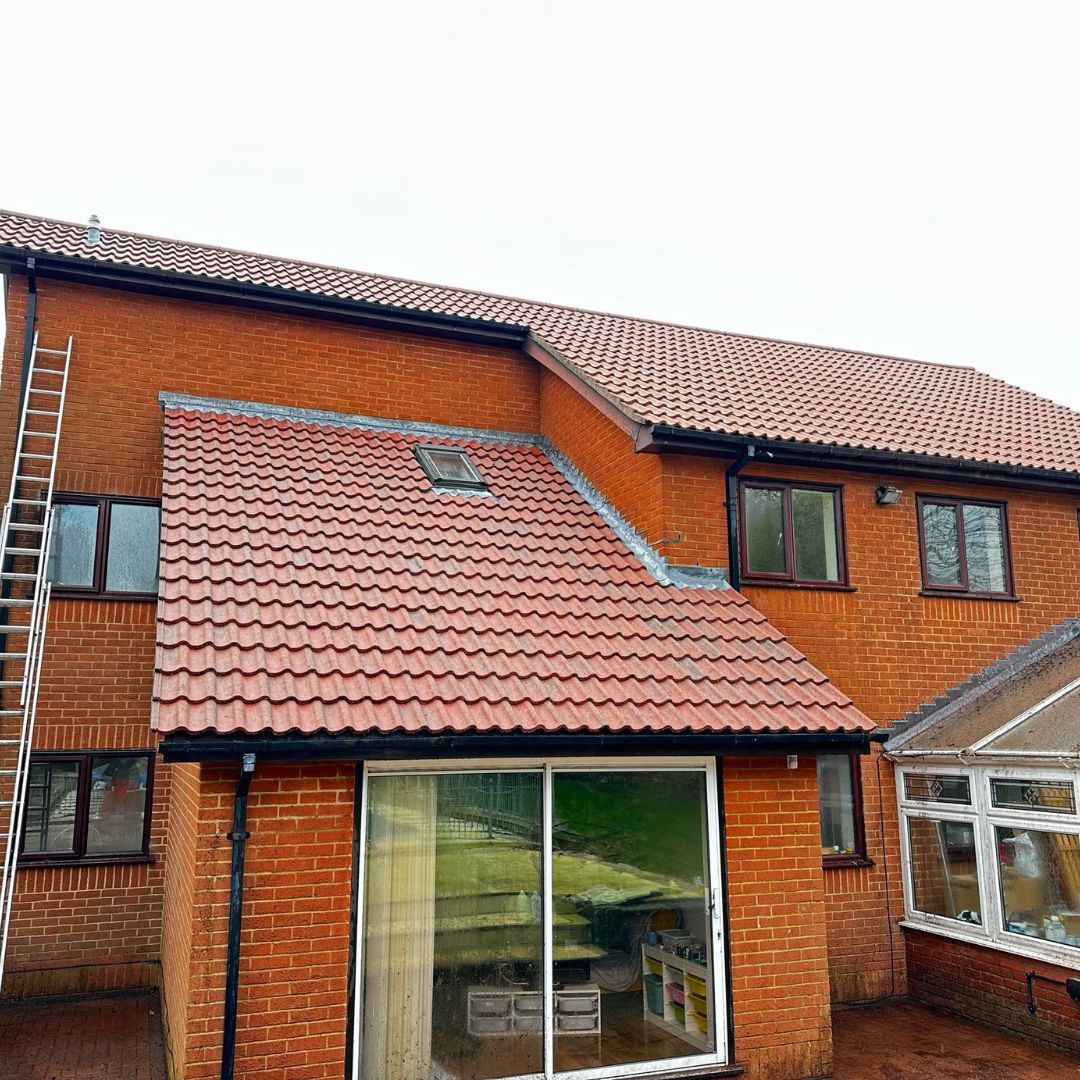
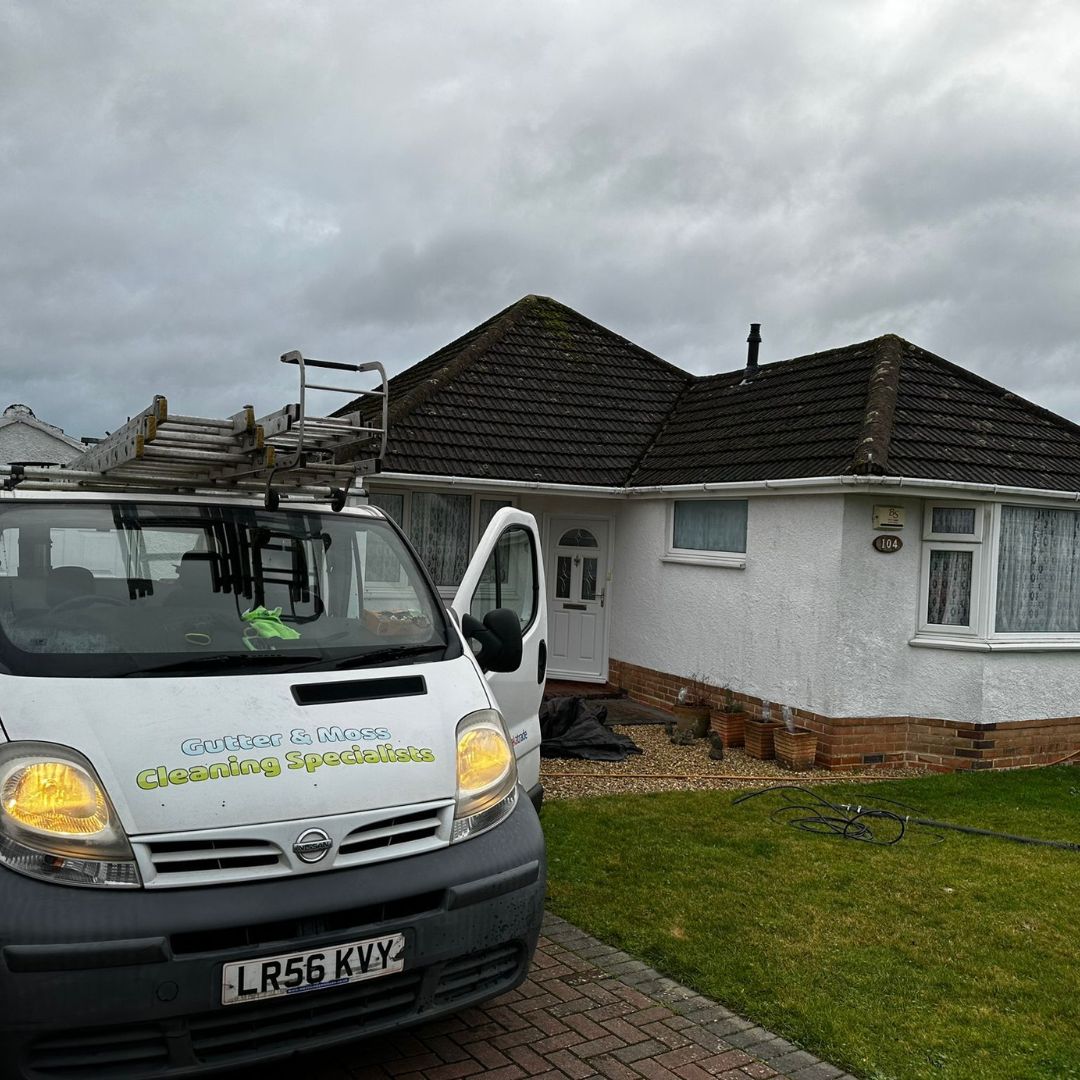
Rural properties bring their own access challenges: soft ground, long roof spans and outbuildings in the way. Our cherry picker gives us reach across wide farmhouse roofs, and mobile towers fit beside low cottage eaves. In both cases, nobody steps onto the tiles, so fragile old clay is never put at risk.
We hold full public liability insurance and stand behind every job with guaranteed workmanship, whether it is a family home, a school or a business premises. We also leave the ground around the house as tidy as we found it.
The problem: The roof needed a full clean and reseal, and the gutters and PVC needed cleaning.
What we did: Andy and a colleague cleaned and resealed the roof, cleaned the gutters and washed down the PVC.
The result: The customer described the work as excellent and rated it 9.75 out of 10.
The problem: Moss on the roof, plus PVC and windows to clean.
What we did: We explained clearly what was needed, removed and treated the moss, washed down the PVC and cleaned all the windows, then cleared up fully.
The result: The customer was very impressed and rated us 10 out of 10.
We cover Sturminster Newton and the vale villages around it: Stalbridge, Marnhull, Shillingstone, Child Okeford, Okeford Fitzpaine and Hazelbury Bryan.
Prices depend on the roof’s size and the amount of moss, so we visit first at no charge and then give you a fixed quote, gutter flush included.
Spring and autumn suit it best, although our team is out every day of the week, 7am until 5pm, whenever the weather is suitable.
Yes. We take on schools, apartment blocks and commercial units as well as private houses.
To get a fixed, no-obligation price after a free survey, phone 01202 618521 or send the form. We cover Sturminster Newton and the surrounding DT10 and DT11 villages, and spring or autumn bookings are ideal for tackling stubborn vale moss.
Let us know how to reach you and we’ll call to agree a day for your free survey.
Find out more on our roof moss removal and gutter cleaning pages.