
Home » Areas We Cover » Roof Cleaning Swanage
Moss and lichen cleared from Purbeck stone-slate, clay and concrete roofs around Swanage Bay, followed by gentle steam, a long-lasting biocide and a gutter flush, all without setting foot on the roof.
Give us your postcode and we’ll find a day to call round.
Our No Foot on Tile policy applies to every roof we clean.
Five-star ratings from customers on Checkatrade and Google.
Practical roof cleaning experience built up across two decades.
Public liability insurance with guaranteed workmanship.
Swanage sits in a bowl. The Purbeck Hills rise behind the town to the north, the limestone headlands close it in to the south, and the bay opens out to the east. Sea air drifts in off the water and gets held in that hollow, so rooftops dry more slowly than you might expect for a seaside town. Slopes that face the hills, away from the sun, are usually the first to turn green.
The town’s roofs reflect its history. Some of the oldest cottages are covered in Purbeck stone-slate, thick limestone flags quarried locally. Victorian resort villas and guest houses climb the slopes above the seafront under Welsh slate and clay, and newer homes on the edges of town tend to have concrete tiles. Each surface holds moss and lichen differently.
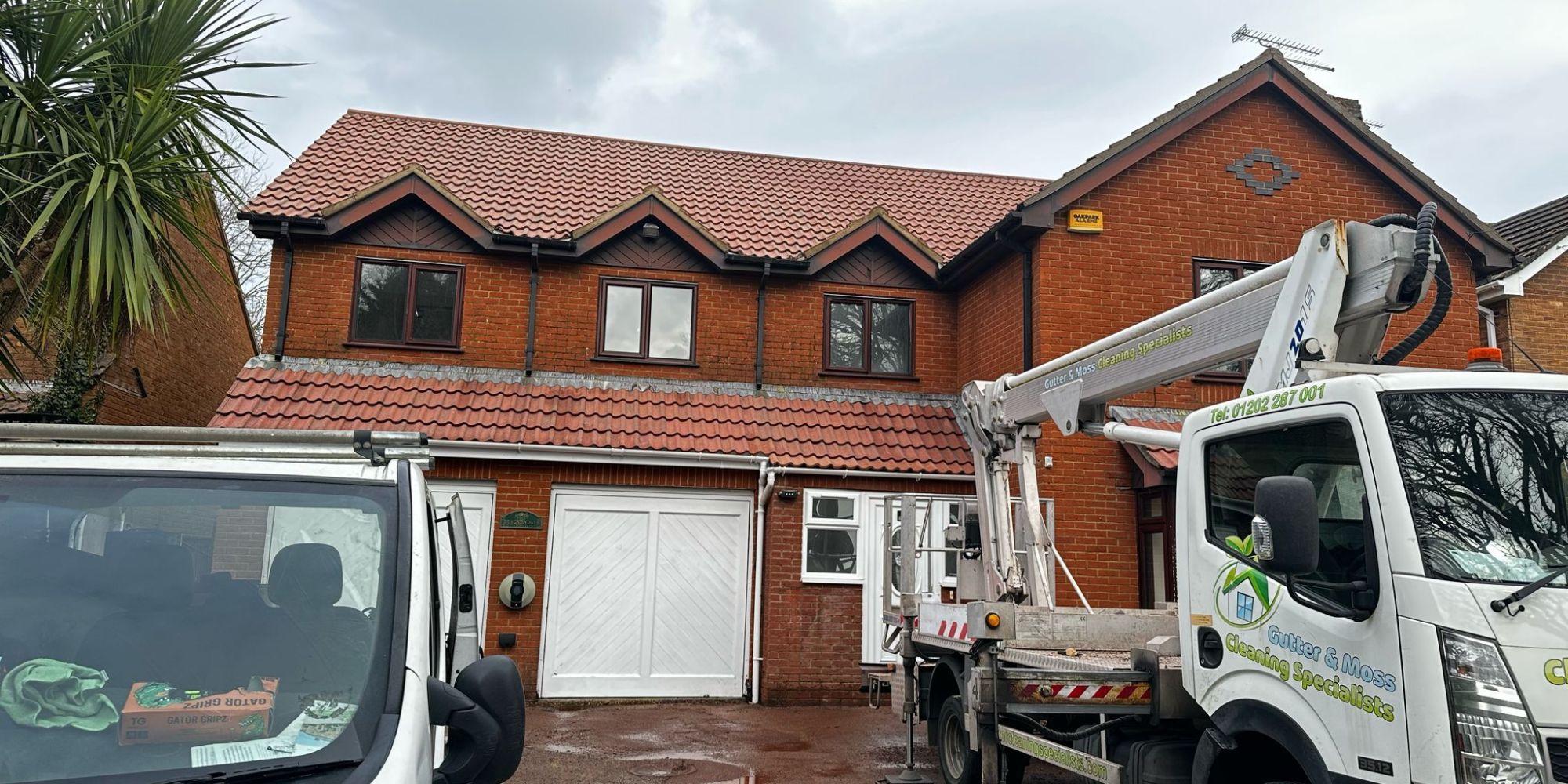
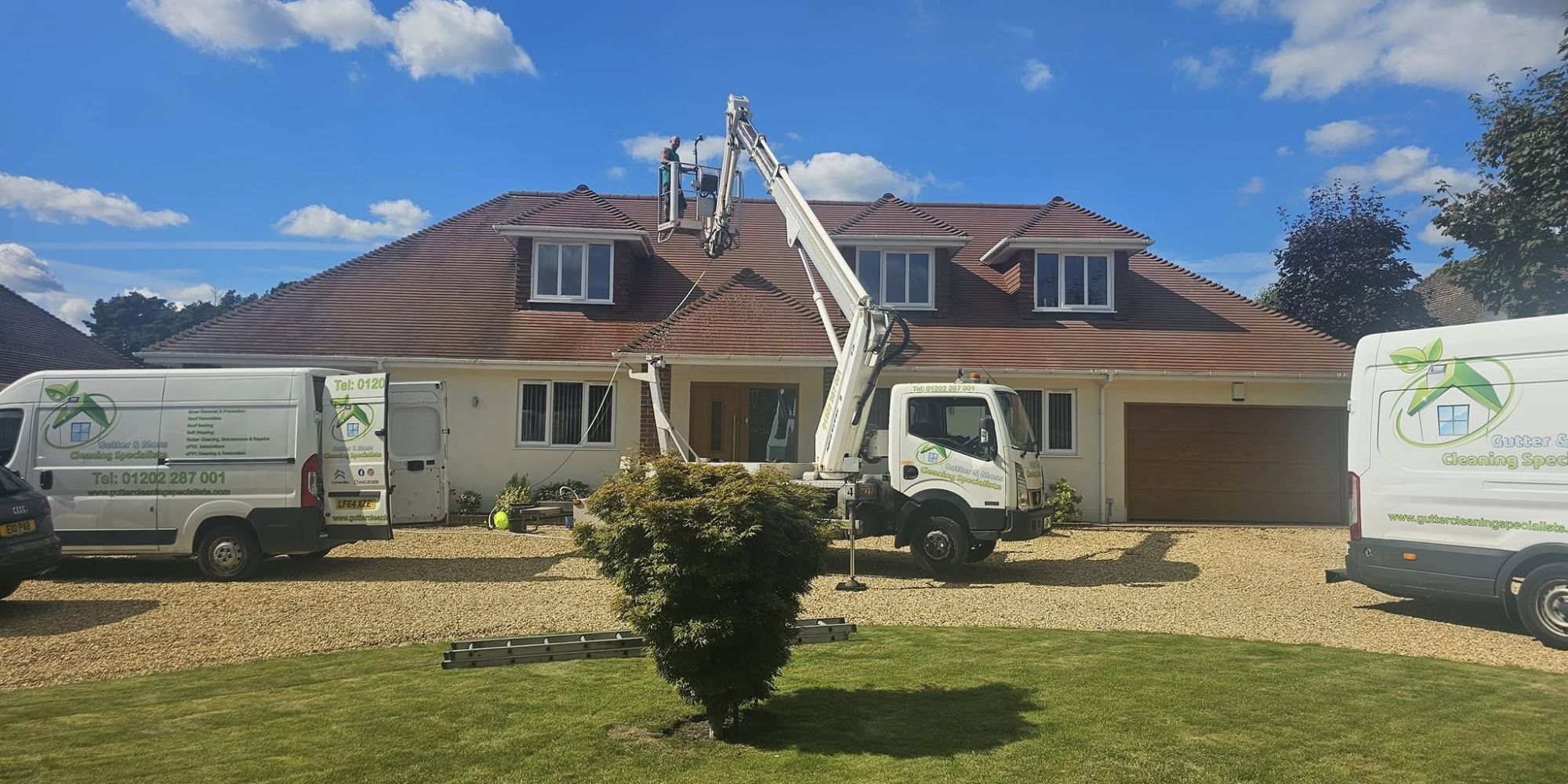
Purbeck stone-slate is already one of the heaviest roof coverings in the country. Add a thick mat of moss soaked with winter rain, which can increase a roof’s load by up to a fifth, and old rafters are under real pressure. The moss also keeps the stone damp, and limestone that stays wet is open to frost: water in the beds freezes, swells and pushes the layers apart.
On Victorian slate and clay the effect is similar on a smaller scale. Moisture held along the tile edges freezes and chips them, while chunks of moss work loose in onshore winds and wash into the gutters. Many of the town’s older houses have long gutter runs and few downpipes, so a single blocked outlet can send water over a large stretch of wall.
A stone-slate roof and a modern concrete one need very different handling, yet the sequence we follow is the same. First the bulk of the moss is taken off, then the surface is cleaned, and finally a treatment is applied to stop growth coming back. Our team works from a cherry picker or tower throughout, never standing on the roof, which matters more on old stone than anywhere else. When we survey your property, we’ll say which approach suits it best.
Stone-slate laps are deep and uneven, which gives moss plenty of places to root. We work it out by hand using telescopic scrapers and specialist tools, easing it from between the courses rather than prising at the stone. Slate and tile roofs get the same treatment along their laps, ridges and valleys, and every scraping is bagged as it comes down.
Once the moss is gone, lichen and algae remain on the surface. Low-pressure steam deals with them using heat, so the soft face of the limestone and the edges of old slate aren’t worn away. It’s the same gentle clean on clay and concrete, and it leaves the roof its natural colour without any scouring.
The last step is a professional-grade biocide, industry approved and biodegradable, applied over the whole roof. It reaches the spores and fine roots that cleaning can’t, which is why it makes such a difference. A roof left untreated may grow back within six to twelve months. Treated, it should stay clear for at least two to three years, and a fresh application every two years keeps the protection going.


 Trustindex verifies that the original source of the review is Google.
 Trustindex verifies that the original source of the review is Google.
 Trustindex verifies that the original source of the review is Google.
 Trustindex verifies that the original source of the review is Google.
 Trustindex verifies that the original source of the review is Google.
 Trustindex verifies that the original source of the review is Google.
 Trustindex verifies that the original source of the review is Google.
 Trustindex verifies that the original source of the review is Google.
 Trustindex verifies that the original source of the review is Google.
Limestone is softer than most people realise, and a jet wash can carve into it in seconds. That’s why we never use high-pressure washing on Swanage roofs, whether they’re covered in stone, slate or tile. Once the surface of a stone-slate has been cut away, it cannot be put back, and a replacement from the quarry is far from cheap.
There’s no point cleaning a roof and leaving the moss sitting in the gutters below. Clearing them is part of the job, with no extra charge, however much comes down.
With the cleaning finished, our team sends water along every gutter, checks that the downpipes are running freely and bags up the debris to take away for responsible disposal. On older Swanage houses with long runs of guttering, that final check helps protect the walls and window frames through the stormier months.
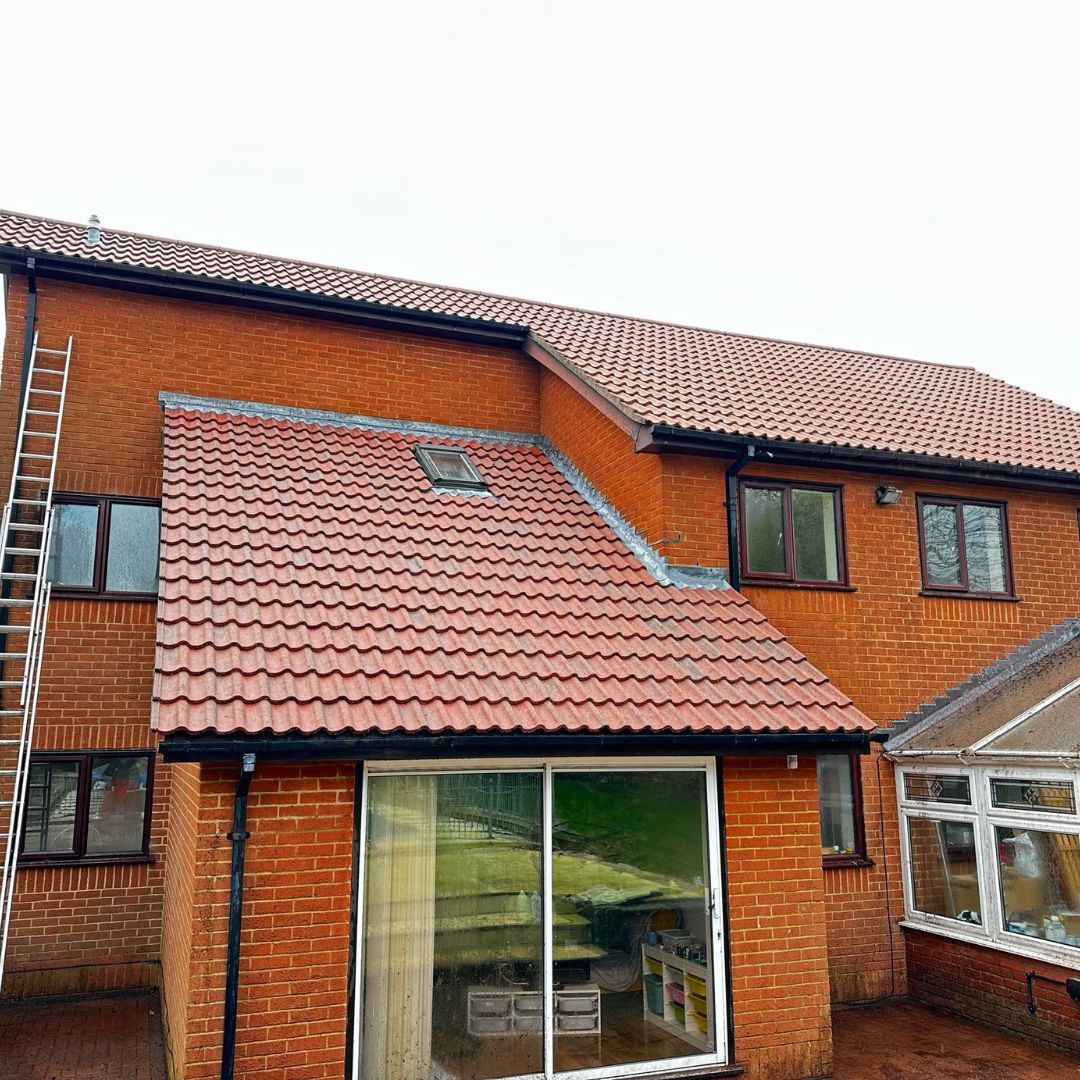
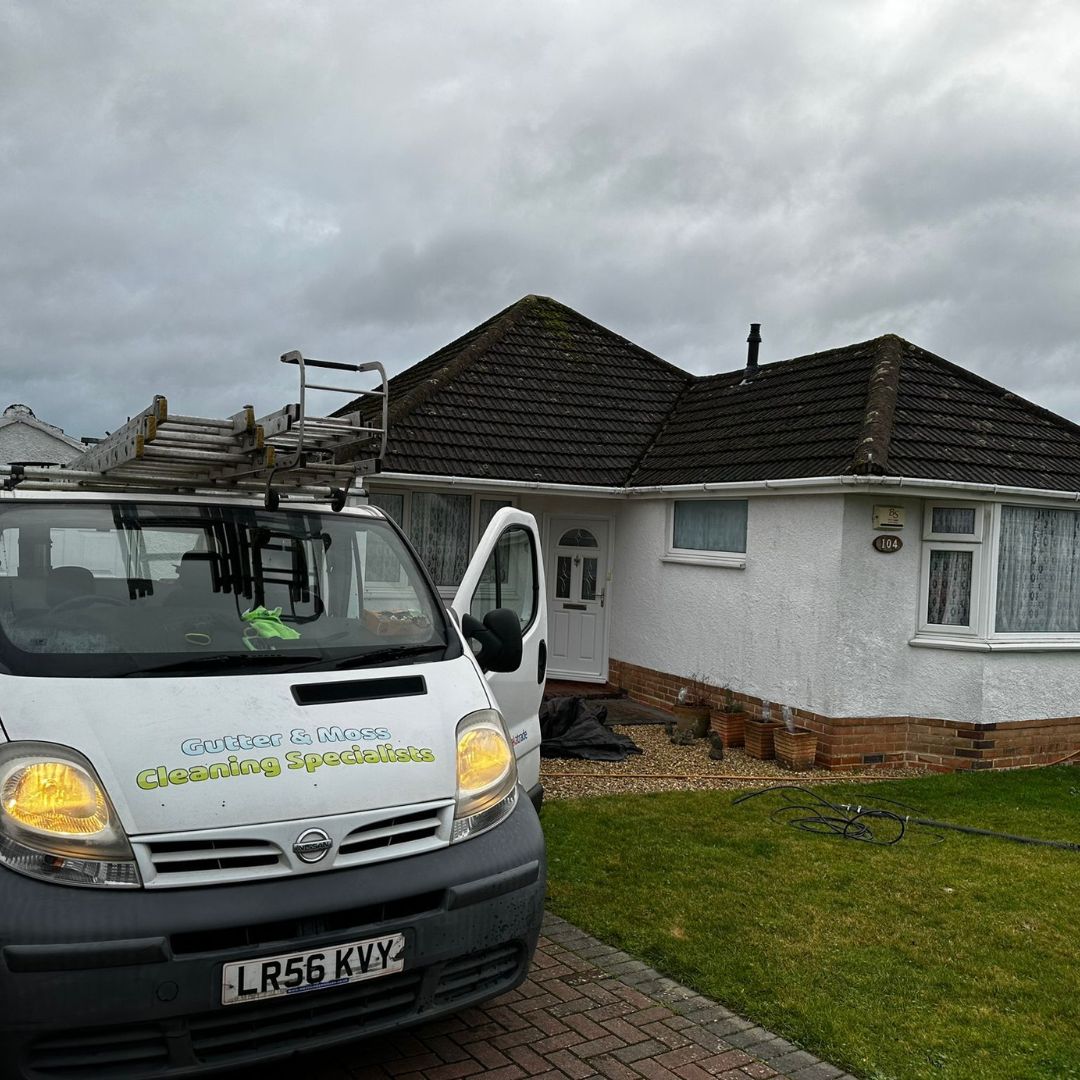
Climbing onto a stone-slate roof is asking for trouble, both for the stone and for the person on it. We avoid it entirely. A cherry picker lets us reach the tall gables of the Victorian villas, and mobile towers fit into the smaller gardens of cottages in the old town.
Public liability insurance is in place on every job, Checkatrade has vetted our team, and we’re confident enough in our work to guarantee it, whether the roof belongs to a family home, an apartment block, a school or a commercial building.
The problem: The homeowners’ roof had a heavy covering of moss and needed a full clean.
What we did: Our team removed the moss from the whole roof, then cleaned every window before packing up.
The result: The site was left clean and tidy, and the customers rated the job 9 out of 10 on Checkatrade.
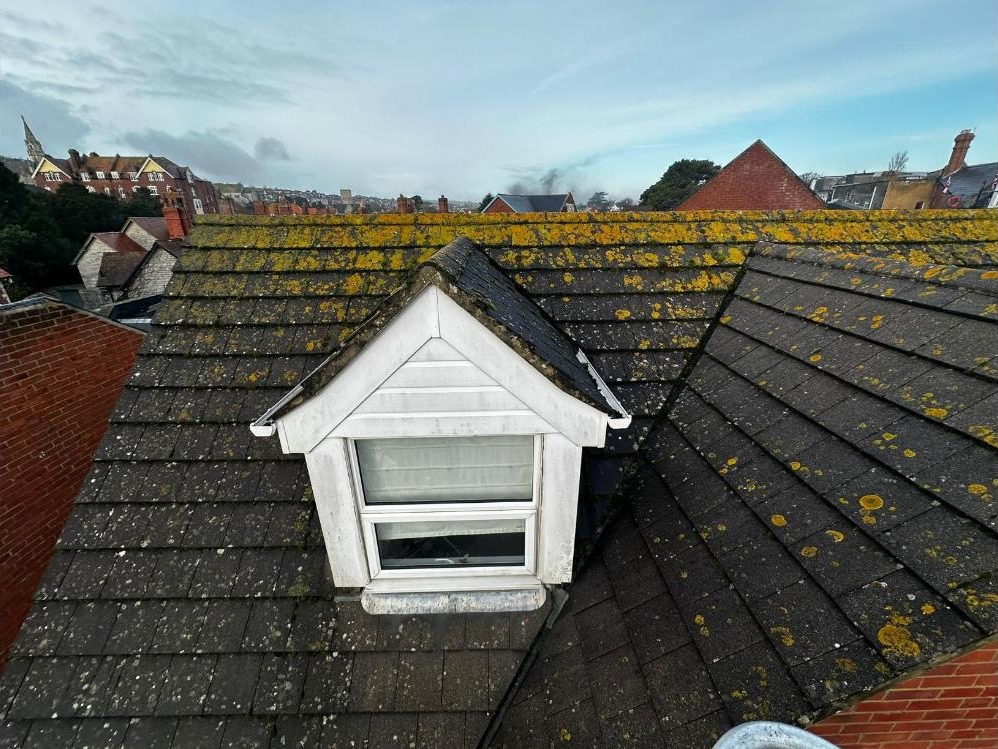
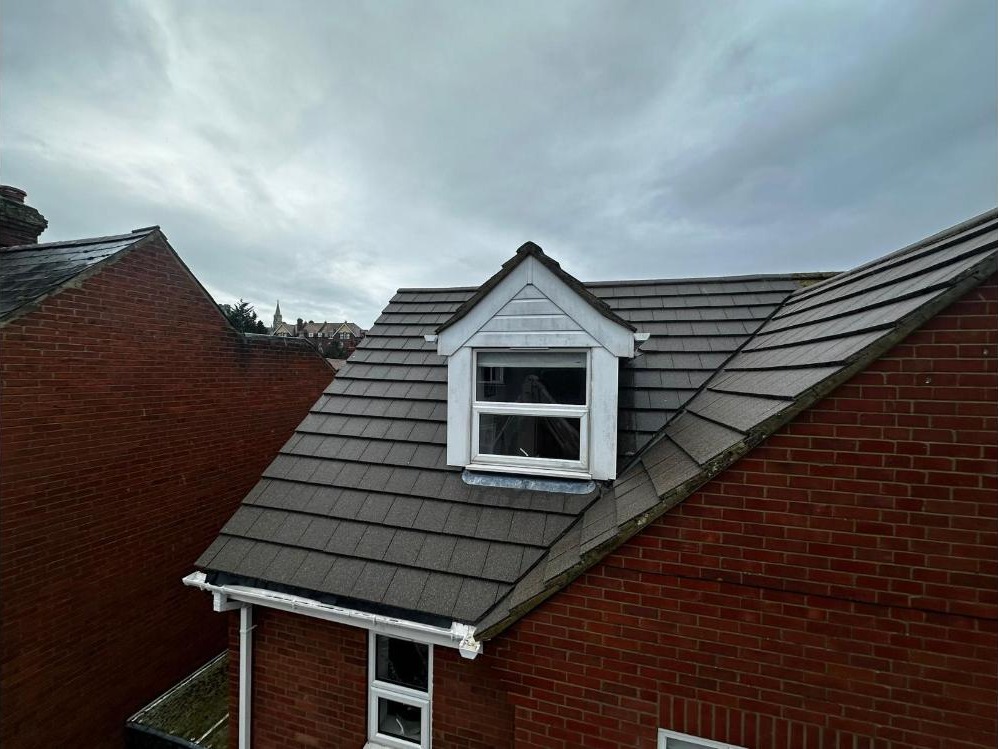
Beyond the town, we regularly cover the nearby Purbeck villages of Langton Matravers and Corfe Castle, where so many roofs are still laid in local stone.
Costs vary with roof area and the amount of moss on it. We come out free of charge and then quote one fixed price, gutter flush included.
Yes. We work from access equipment so nobody stands on the stone, and use low-pressure steam rather than jet washing.
For a typical house, expect a day or two on site. Larger roofs and awkward access sit at the longer end.
Ready for a cleaner roof before the winter storms reach the bay? Phone 01202 618521 or use the enquiry form, and we’ll call round for free and quote a fixed price, with no commitment. We work throughout Swanage and Purbeck, covering BH19 and BH20.
Send your details over and we’ll ring to set up a free site visit at a time that works for you.
Read about our roof cleaning and moss removal and gutter maintenance services.